5 Warning Signs of Breast Cancer Every Woman Should Know
By: Piyavate Hospital
Early detection, over 90% curable.

Breast cancer is the most common cancer among Thai women and worldwide. Recent statistics show that 1 in 8 women has a risk of developing breast cancer in her lifetime. However, if detected in the early stages, the chance of a complete cure is higher than 90%.
Regularly observing changes in your body and getting routine breast screenings are the most important shield to help you detect abnormalities at an early stage.
5 Warning Signs of Breast Cancer to Watch Out For... Don't Ignore!

- Feeling an unusual lump (most critical sign): A hard mass in the breast or armpit that doesn't move when touched. Be cautious, as early-stage cancerous tumors are often painless, leading many to overlook them.
Recommendation: Practice monthly breast self-exams 7–10 days after your period, when breasts are least tender. - Changes in breast skin: Dimpling, puckering, or a skin texture resembling an orange peel (Peau d'orange), caused by the tumor pulling on the skin layer.
Observation tip: Stand in front of a mirror, raise your arms above your head, and check the shape and smoothness of the skin on both breasts. - Nipple abnormalities: Newly inverted or pulled-in nipples, an itchy rash or sores around the nipple, or unexpected fluid/blood discharge when not breastfeeding.
- Abnormal breast pain: Although cancerous lumps are usually painless, localized pain in one breast lasting more than 2–3 weeks that is unrelated to your menstrual cycle warrants prompt medical attention.
- Changes in size or shape: One breast becomes noticeably larger, smaller, or abnormally swollen with no cause related to changes in body weight.
Breast cancer screening guidelines by age group
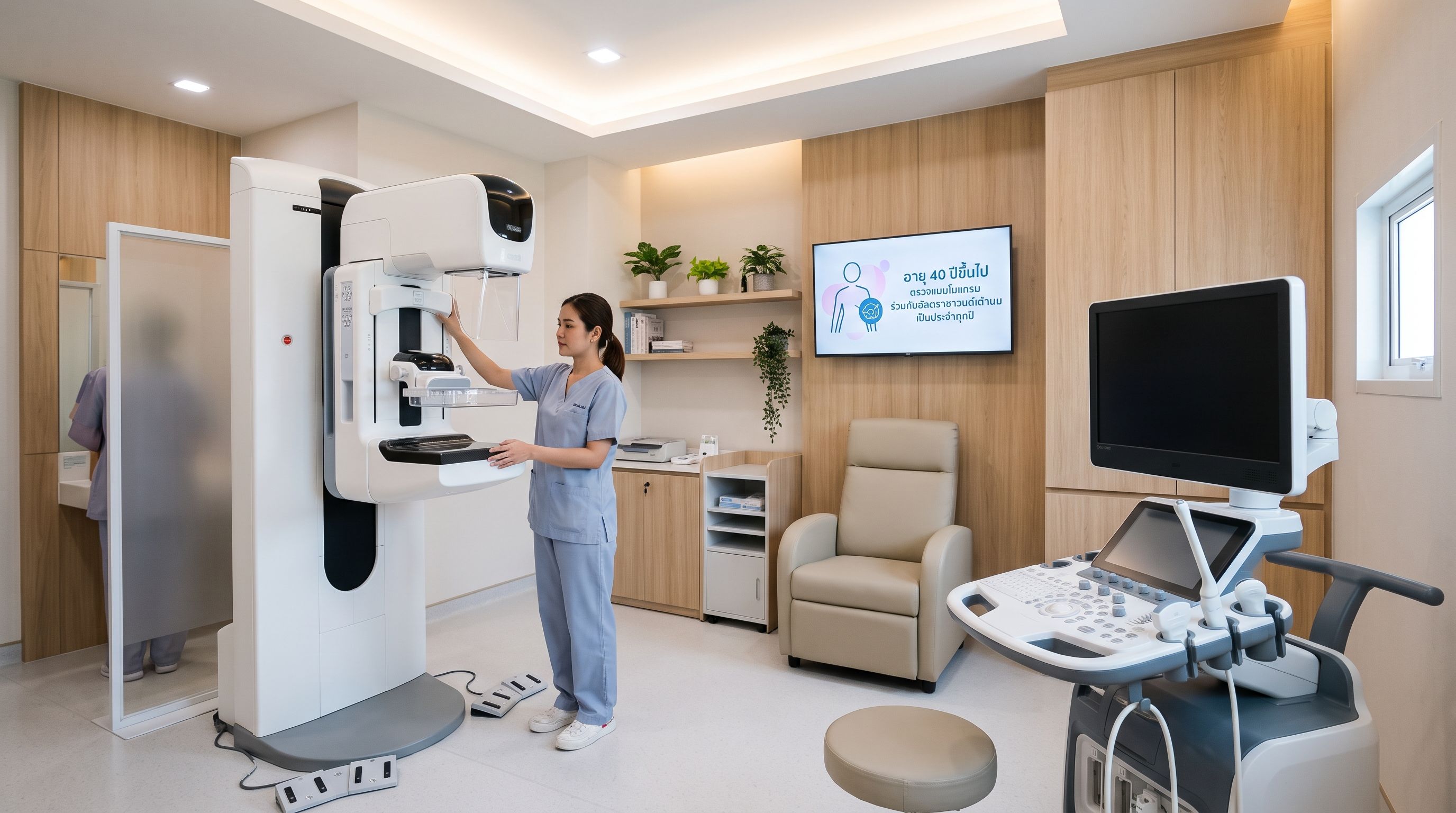
Medical screening is key to detecting early-stage cancer before symptoms appear or a lump can be felt:
| Age Range | Recommended Screening Method | Screening Frequency |
|---|---|---|
| 20 years old and above | Breast self-examination (BSE) | Regularly every month |
| 20 – 39 years old | Clinical breast examination by a specialist (CBE) | Every 1 – 3 years |
| Aged 40 and older | Digital Mammogram with breast ultrasound | Annually |
| High-risk group (family history) | Specialized screening, such as MRI or cancer gene testing (BRCA1/BRCA2) | At the discretion of a medical specialist |
What to do... when warning signs of an abnormality are found?

- See an ophthalmologist or breast surgeon promptly: Do not panic and do not wait for symptoms to worsen. Most lumps felt are likely just cysts or benign, non-cancerous tumors.
- Keep a record of symptoms: Note when the abnormality was first noticed, the characteristics of the symptoms, and any relationship to your menstrual cycle.
- Prepare your family medical history: Inform your doctor if direct relatives (mother, grandmother, sister) have a history of breast cancer or ovarian cancer.
Cancer Center and Radiation Therapy Center, Piyavate Hospital

The Cancer and Radiotherapy Center at Piyavate Hospital offers comprehensive cancer care through a multidisciplinary team of medical specialists, advanced diagnostic technology, and modern radiotherapy equipment, focusing on personalized treatment planning to ensure patients achieve the best possible outcomes and a good quality of life.
Note: This article is for public relations and general educational purposes only and cannot be used as a substitute for medical diagnosis or advice. If you experience any abnormal symptoms or have concerns regarding your eye and overall health, please schedule an appointment directly with a medical specialist.
For more information, to schedule a doctor's appointment, or to stay updated with hospital news.
