Croup Syndrome
By: Piyavate Hospital
Getting to Know Croup Syndrome

Croup, or laryngotracheobronchitis, is a condition caused by a viral infection of the upper respiratory tract, with the most common pathogen being the parainfluenza virus. This infection causes acute swelling and obstruction of the airway. It is commonly found in children under 3 years of age because children's airways are smaller than those of adults, making them more prone to obstruction.
Symptoms and Severity Levels of the Disease
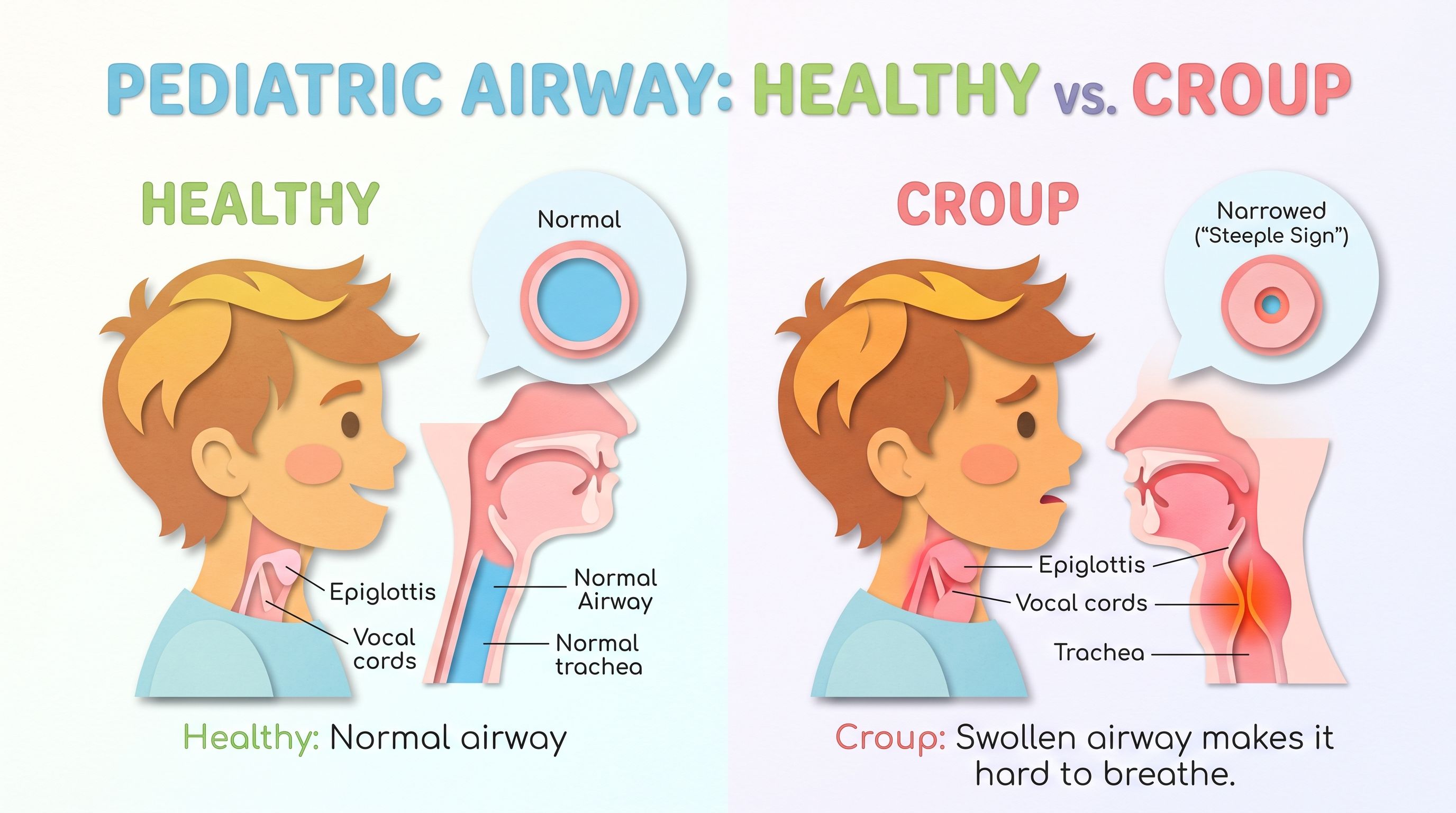
Symptoms usually begin like a common cold, including nasal congestion, a runny nose, and a fever. About 1–3 days later, the inflammation spreads down to the larynx and trachea, causing swelling and airway obstruction, which leads to the following symptoms in children:
- Difficulty breathing
- Noisy breathing (Stridor)
- Barking cough
- Hoarseness
- Shortness of breath
In severe cases, clear symptoms of airway obstruction may be found, such as:
- Nasal flaring
- Chest retractions while breathing
- Cyanosis due to hypoxia
- Abnormal breath sounds heard on lung auscultation
Disease Severity
The severity of croup is divided into 3 levels, evaluated based on respiratory distress, skin color, blood oxygen level, cough characteristics, level of consciousness, and breath sounds entering the lungs.
1. Mild severity (Mild Croup)
- The child can eat normally.
- Still interested in people and the environment.
- Occasional barking cough
- No stridor at rest
- No chest indrawing while breathing.
2. Moderate severity (Moderate Croup)
- Barking cough almost all the time
- Stridor at rest
- Chest retractions while breathing
- No restlessness
3. High severity (Severe Croup)
- Barking cough
- Stridor at rest
- Chest retractions
- Restlessness
- Decreased level of consciousness, fatigue, lack of interest in surroundings
Symptoms that require immediate medical attention
- Loud or abnormally high-pitched sound when breathing in and out
- Rapid breathing or increased difficulty breathing
- Drooling or difficulty swallowing
- Cannot drink milk or water, weak, restless
- Lips, nails, or fingertips and toes turning gray or purple
- Symptoms of dehydration, such as dry mouth, dry tongue, and decreased urination
Causes and Diagnosis

Cause
Most cases are caused by viral infections, particularly parainfluenza virus. Children can contract the virus by inhaling infected droplets or by touching contaminated toys and surfaces. In some cases, bacterial complications may occur, which are more severe. Additionally, croup-like symptoms can be caused by other conditions, such as:
- Allergies
- Inhalation of irritants
- Acid Reflux
- Foreign body in the respiratory tract
Diagnosis
- Listen to breath sounds on the chest with a stethoscope
- Check inside the throat for swelling and redness
- Neck X-ray to check for tracheal narrowing or foreign objects
Treatment Guidelines and Prevention
Treatment: Treatment guidelines depend on the severity of symptoms.
Mild severity
- Symptomatic treatment
- Administer cough medicine, mucolytics, or bronchodilators at the doctor's discretion.
- Drink plenty of water
- Can be cared for at home by following the doctor's advice
Moderate severity
- Hospitalization is recommended
- Closely monitor symptoms
- Administer intravenous fluids
- Nebulization to reduce airway swelling
High severity
- Give oxygen immediately
- Consider intubation if symptoms do not improve.
Prevention
- Cover your mouth and nose with a tissue when coughing or sneezing, and wash your hands thoroughly.
- Get vaccinated as recommended to prevent certain causative pathogens.
- Avoid taking children to crowded places during an outbreak.
- If a family member is sick, avoid close contact with children.
- Regularly clean the house, toys, and children's equipment.
For more information, to schedule a doctor's appointment, or to stay updated with hospital news.
