Eye Health Screening
By: Piyavate Hospital
Why Eye Health Screening Is Important

Eyes play a key role in vision, which is the most important sense in humans. They are also one of the most delicate organs and can deteriorate or become impaired due to various factors, such as staring at screens on phones, computers, or televisions, reading books, and exposure to dust, smoke, sunlight, or chemicals. As people get older, their eyes and vision naturally degrade, reducing visual efficiency and potentially affecting physical, mental, and social well-being.
Therefore, eye health check-ups are important because they help detect vision problems and eye diseases at an early stage. This allows for timely awareness of eye conditions, reducing risks and preventing potential hazards that could cause temporary or permanent vision loss.
Who should get an eye exam?

- People with clear abnormal eye symptoms: such as eye pain, red eyes, burning eyes, excessive tearing, blurred vision, double vision, seeing flashes of light, seeing dark spots or shadows in the center of vision, distorted color vision, or abnormal lumps around the eye area.
- People with vision problems: such as nearsightedness, farsightedness, or astigmatism, should get an eye exam at least once a year because they are at a higher risk of developing certain eye diseases than normal, such as retinal detachment.
- General individuals: People of all genders and ages should get an eye exam every 2–3 years. For individuals aged 40 and older, vision begins to deteriorate and visual efficiency changes, so they should undergo a comprehensive eye exam at least once a year to monitor for potential eye conditions such as presbyopia, glaucoma, cataracts, and macular degeneration.
- People with risk factors for eye diseases: should have an eye exam at least once a year.
- People with underlying medical conditions: such as diabetes, hypertension, thyroid disease, autoimmune disease, immunodeficiency, sickle cell disease, etc.
- People with a family history of genetic diseases: such as glaucoma and macular degeneration.
- People who take certain medications with eye side effects: such as steroids, certain tuberculosis drugs, joint disease medications, autoimmune disease drugs, and contraceptives.
- Others: include people whose work requires heavy eye use, regular contact lens wearers, and those with a history of eye conditions (such as retinal detachment, eye injuries, or vision loss in one or both eyes).
Benefits of an Eye Exam and Preparation

Benefits of an Eye Exam
- Changes in vision due to age can cause eyesight to not be as good as it should be. If detected and corrected, vision can be restored to normal.
- Detecting eye diseases in their early stages and receiving prompt treatment effectively helps slow down the severity and side effects of the condition.
- An eye exam may help detect physical diseases. For example, finding a white ring around the cornea may indicate high blood lipids, while finding yellowing of the whites of the eyes indicates abnormal liver function.
- Eye examinations in certain systemic diseases can help confirm the diagnosis.
- Some brain abnormalities can be directly detected at the optic disc through an eye exam, without requiring additional complex and expensive tests.
Preparing for an eye exam
- Should not strain your eyes
- Refrain from wearing makeup, especially around the eyes, and do not wear false eyelashes.
- Please bring your regular eyeglasses or contact lenses with you to compare with the measured vision values.
- You should bring your physical medical history, including the names of any current medications, as certain conditions or drugs can affect your vision. In addition, patients should inform the doctor or nurse of any history of drug, food, or other allergies.
What Does an Eye Exam Include?
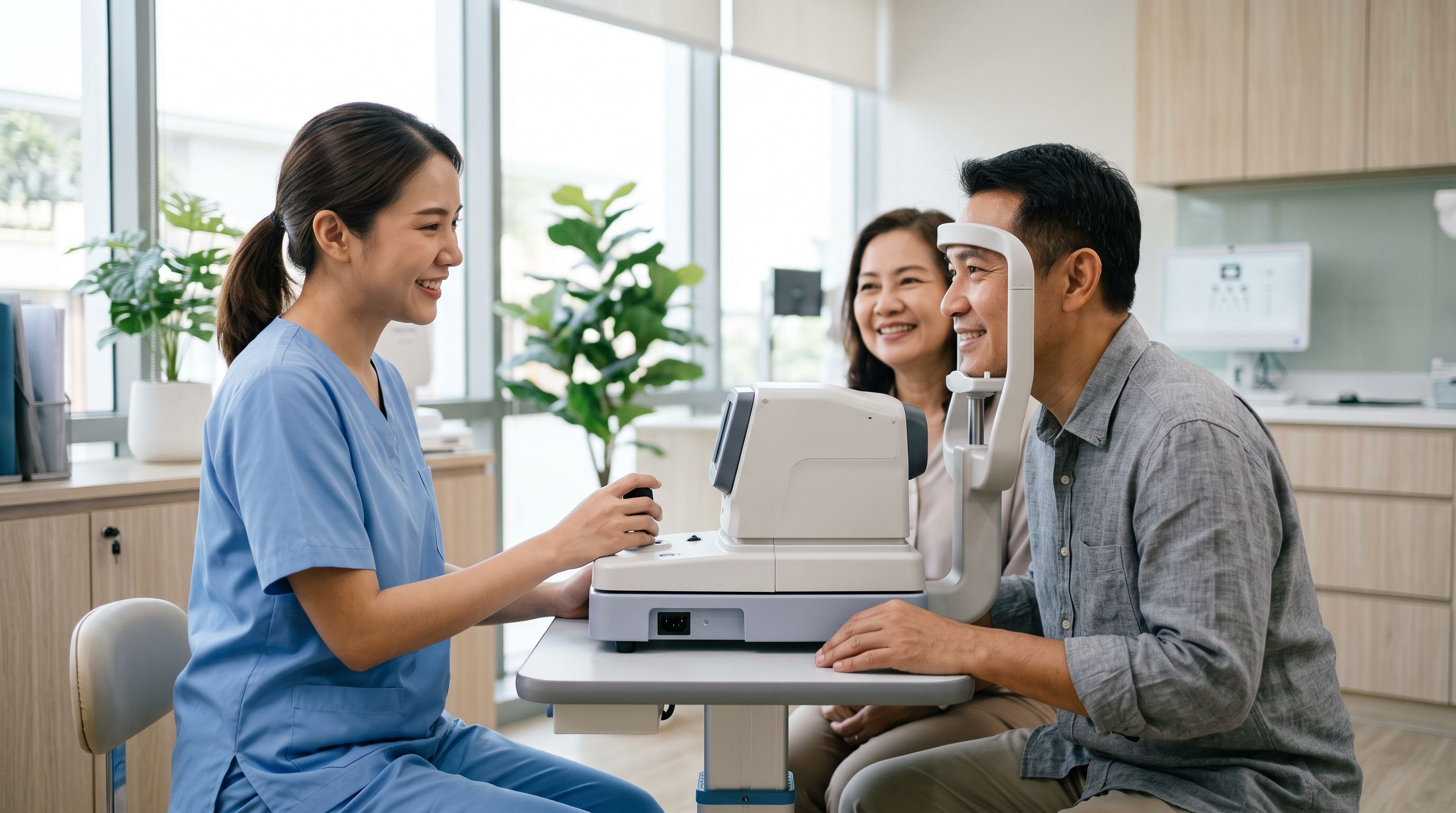
- Visual Acuity Test: measures vision by having the patient read a chart with numbers or letters of various sizes at a standard distance of 6 meters. The test is performed on one eye at a time while covering the other eye.
- Automated vision measurement using an autorefractor: is a computer-based eye test that operates automatically, providing fast and accurate results as clear numbers for use in making eyeglasses.
- Intraocular pressure measurement: is a test to measure the pressure inside the eye. If higher than normal, there is a risk of glaucoma. It is performed using a device called a Tonometer, which blows a puff of air onto the cornea and is completely painless.
- Color blindness test: measures your ability to see colors. The test-taker will look at several plates, each containing a large circle filled with small colored dots that hide numbers and lines to trace. The colors used are those that color-blind people often confuse. If you can read all the numbers and trace the lines correctly, your vision is considered normal.
- A general external eye examination by a physician: which includes evaluating eye movement, visual field, conjunctiva, sclera, cornea, and iris, as well as the eyelids, the distance between the upper and lower eyelid margins, discharge, eyelashes, tear ducts, position of both eyes, and any abnormal bumps or lumps.
- Summarize the results and receive advice from a physician: If abnormalities are found, a referral to an ophthalmologist for a comprehensive eye exam may be required.
For more information, to schedule a doctor's appointment, or to stay updated with hospital news.
