Intrauterine Insemination (IUI)
By: Piyavate Hospital
What is Intrauterine Insemination (IUI)?

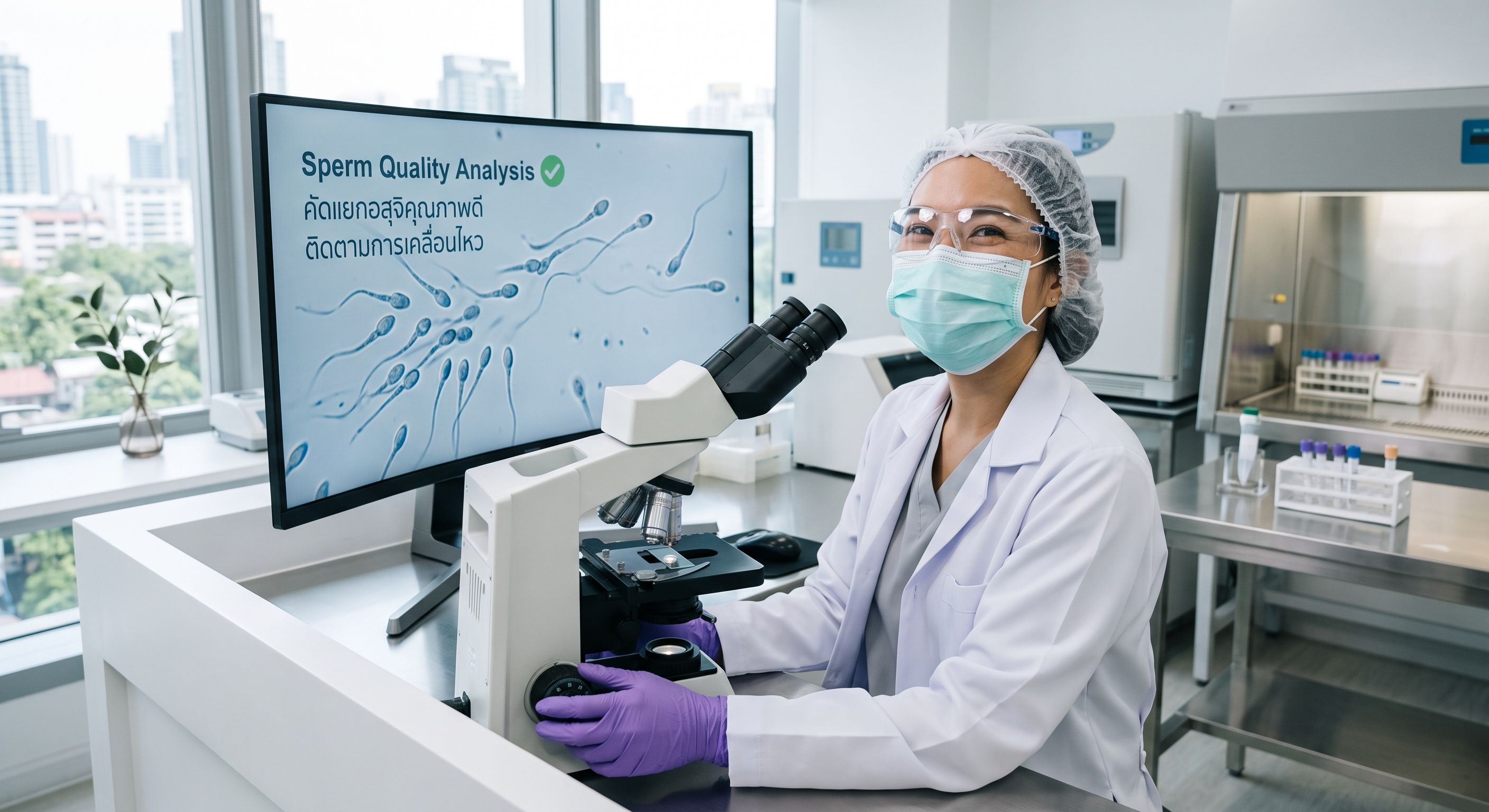
IUI (Intrauterine Insemination) is a medical technology used to treat infertility. Selected and laboratory-prepared sperm is injected directly into the uterine cavity through a small plastic catheter inserted through the cervix. This method increases the chances of sperm reaching the fallopian tubes and fertilizing the egg more easily, slightly increasing the likelihood of pregnancy compared to natural intercourse.
Principles of IUI
Intrauterine insemination (IUI) is the selection of healthy, motile, and high-quality sperm before injecting it directly into the uterine cavity around the time of ovulation to increase the chances of fertilization. The average success rate is approximately 10–15% per treatment cycle, which is higher than natural conception in certain couples experiencing infertility (about 3–4% per month). However, success depends on several factors, including sperm quality, the quantity and quality of eggs, and the completeness of the uterine lining.
Reasons Why IUI Increases Pregnancy Chances and Suitable Candidates

Reasons why IUI increases the chances of pregnancy
- Increases the number of sperm that can reach the fallopian tubes.
- Goes through a selection process, improving sperm quality.
- Reduces the travel distance of sperm as it is injected directly into the uterine cavity.
- Time the injection to coincide with ovulation
- Ovulation-stimulating medication can be used to increase the number of eggs (typically 1–3 eggs).
- Endometrial thickness is monitored using ultrasound to optimize treatment appropriately.
Suitable candidates for IUI
- Younger age (generally under 30–35 years old, success rates are higher)
- Having cervical stenosis
- Chronic anovulation, such as PCOS
- At least 1 normal fallopian tube
- The male partner has good motile sperm and a count of more than 5 million.
People for whom IUI is not recommended
- Bilateral fallopian tube blockage
- Severe pelvic adhesions from endometriosis
- Unsuccessful after 4–6 or more IUI cycles
- The male partner has a very low sperm count (less than 1 million) or is unable to ejaculate.
Preparation, Treatment Steps, and Success Rate
Preparation before treatment
- Eat a complete diet from all 5 food groups and take vitamin supplements as recommended by a doctor.
- Get at least 7–8 hours of rest per day.
- Exercise regularly
- Avoid smoking and alcoholic beverages.
- Strictly follow the doctor's instructions.
Treatment Steps
- Start ovarian stimulation medication on days 3–5 of the menstrual cycle (oral or injection) continuously for about 5 days.
- Monitoring follicle growth with ultrasound and blood tests
- When the egg reaches approximately 18–20 mm in size, ovulation-triggering hormones will be administered.
- Inject prepared sperm into the uterine cavity during ovulation (approximately 35–40 hours after the ovulation trigger injection).
- Administer medication to support the uterine lining and schedule a pregnancy test about 2 weeks after the procedure.
Chance of success
The average pregnancy rate is 15–20% per treatment cycle, depending on age, semen quality, number of eggs, and the cause of infertility. Most pregnancies are single pregnancies, with a chance of twin pregnancy of about 10–15%.
For more information, to schedule a doctor's appointment, or to stay updated with hospital news.
